

Skip Navigation | ANU Home | Search ANU | Directories
The Australian National University
Eccles Institute of Neuroscience

Jan Provis

Contact: jan.provis@anu.edu.au

Research Team

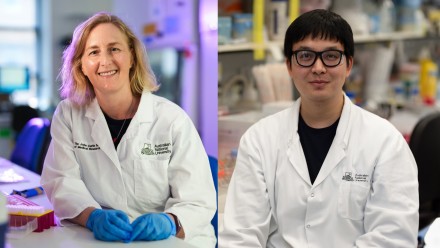
Postdoctoral Fellow

  • Dr Peter Kozulin

Graduate Students

  • Matt Rutar
  • Rizsa Albarracin

Research Support

  • Larissa Doughty

Collaborations

At ANU

  • Dr Jan Hemmi
  • Dr Keely Bumsted O'Brien
  • Dr Krisztina Valter

Nationally

  • Dr James Bourne, Research Fellow NHMRC, Australian Regenerative Medicine Institute, Monash University, Clayton, Victoria.
  • Dr Michelle Madigan, School of Optometry & Vision Science, University of New South Wales, and Save Sight Institute, Sydney.
  • Nick Di Girolamo, Senior Research Fellow NHMRC, Centre for Infection and Inflammation Research, School of Medical Sciences, University of New South Wales.

Internationally

  • Prof Anita Hendrickson, Dept Biological Structure, University of Washington, Seattle, WA, USA.
  • Dr Jonathan Sebag, University of Southern California, Los Angeles, CA, USA

Prof. Jan Provis

Chief Investigator

Biography

A section through the fovea of adult human retina. The retina is thinnest at the foveola, in the centre of the image, where the outer segments (OS) of cones are most tightly packed. GCL, ganglion cell layer; fH, fibres of Henle; IS, inner segments; RPE, retinal pigmented epithelium.

Jan Provis completed her PhD at UNSW in 1980 and took up a position as Post-doctoral Research Fellow at Sydney Eye Hospital, in the Department of Clinical Ophthalmology where she established a laboratory and held successive grants looking at aspects of development of the human retina. After progressing to Research Fellow, she obtained a Lectureship in the Department of Anatomy at the University of Sydney in 1988, progressing to Associate Professor in 1998. During this period she was Co-Chair of the Neuroscience Block in the University of Sydney Medical Program and has been co-ordinator of a number of undergraduate Neuroscience and Anatomy courses within the University of Sydney Science Faculty. Jan was supported by a Senior Fellowship from the international organization Research to Prevent Blindness in 1995, at the University of Washington Seattle. In 2004 Jan was appointed as Senior Fellow in the Research School of Biological Sciences at the Australian National University. Currently Jan is Professor of Anatomy in the ANU Medical School, Theme Leader and Chief Investigator in the ARC Centre of Excellence in Visual Science, Chair of the Retina Australia Grants Assessment Committee, a member of the Scientific Advisory of the Ophthalmic Research Institute of Australia, an NHMRC GRP member and Chair of the Year 1-2 Curriculum Committee (Medical School).

Research Interests

A the foveal avascular area of a 2 year-old macaque monkey. Usually the retinal vessels (red) never grow into the central region, where the foveal depression forms, even though the fovea forms relatively late, and there are no obvious boundaries to the region. Green cells are GFAP-immunoreactive astrocytes.

Jan's research career has been dedicated to achieving a better understanding of the biology of the human retina, in particular the fovea, through direct investigation of adult human post mortem tissues, human fetal tissues and animal models. The retina of humans and monkeys is unique amongst mammals, having a highly specialized central region - the fovea centralis - which mediates high visual acuity. The fovea is of fundamental importance to our success as a species, and is highly vulnerable to degenerative disease. Over the course of her career Jan has described the time course of differentiation of the human neural retina, the development and arrangement of its immune system and vasculature, the relationship of these events to specialization and formation of the foveal depression. More recently her research has focussed on the molecular mechanisms regulating the development of central retina. Jan has also participated in a range of studies analysing the disease process of age-related macular degeneration (AMD) and the significance of immunological mechanisms. Presently the focus of studies in adult retina is on how the photoreceptor population ages and the sequelae of the ageing process, particularly in the macula, and the progression from normal aging of the retina to AMD. Jan has a broad perspective on how the crucial, central (macular/foveal) part of the primate retina is likely to have evolved, how it develops, what the molecular and functional constraints are in central retina and why it is vulnerable to degeneration.

Recent Publications (since 2005)

A drawing from Bach and Seefelder (1911, 1912, 1914), showing the optic vesicle of a human fetus at the 8mm stage. ek, ectoderm; mes, mesenchyme; lu, lumen of the lens vesicle; ah, hyaloid artery; st, optic stalk. The differentiating retina is the C-shaped structure to the right, above and below the lens vesicle. The cavity of the optic vesicle is still patent, and separates the retina from the differentiating pigment epithelium, which is shown to include some melanin granules.

    Research Publications

  • Cornish, EEG, Madigan, MC, Natoli, R, Hales, A, Hendrickson, AE and Provis, JM. (2005) Gradients of Cone Differentiation and FGF Expression During Development of the Foveal Depression in Macaque Retina Visual Neuroscience 22: 447-459.
  • Provis JM, Penfold PL, Cornish EEG, Sandercoe T, and Madigan MC. (2005) Anatomy and development of the macula: specialization and the vulnerability to macular degeneration. Clinical and Experimental Optometry 88: 269-281.
  • Georges P, Cornish EE, Provis JM and Madigan MC (2006) Müller cell expression of glutamate cycle-related proteins in early human retinal development. British Journal of Ophthalmology 90: 223-228
  • Allende, A, Madigan, MC and Provis, JM (2006) Endothelial cell proliferation in the choriocapillaris during human retinal differentiation. British Journal of Ophthalmology 90: 1046-1051
  • Provis JM and Hendrickson AE (2008) The foveal region remains avascular throughout development in humans. Arch Ophthalmol 126:507-511. IF, 3.2
  • Stone J, van Driel D, Valter K, Rees S and Provis JM (2008) The locations of mitochondria in mammalian photoreceptors: Relation to retinal vasculature. Brain Research 1189:58-69. IF, 2.3
  • Natoli R, Provis JM, Valter K, Stone J (2008) Expression and role of the early response gene Oxr1 in the hyperoxia-challenged mouse retina. Invest Ophthalmol Vis Sci 49: 4561-4567
  • Natoli R, Provis J, Valter K, Stone J (2008) Gene regulation induced in the C57BL/6j mouse retina by hyperoxia: a temporal microarray study. Molecular Vision 14: 1983-1994
  • Hendrickson A, Bumsted O'Brien K, Natoli R, Ramamurthy V, Possin D and Provis J (2008) Rod photoreceptor differentiation in fetal and infant human retina. Exp Eye Res 87: 415-426
  • Kozulin P, Natoli R, Bumsted O'Brien KM, Madigan MC and Provis JM (2009) Differential expression of anti-angiogenic factors and guidance genes in the developing macula. Molecular Vision 15: 45-59.
  • Shelley EJ, Madigan MC, Natoli R and Provis JM (2009) Cone degeneration in aging and age-related macular degeneration Arch Ophthalmol 127: 483-492. IF, 3.2
  • Querubin A, Lee HR, Provis JM, Bumsted O’Brien KM (2009) Photoreceptor and Ganglion Cell Topographies Correlate with Information Convergence and High Acuity Regions in the Adult Pigeon (Columba livia) Retina. Journal of Comparative Neurology 517: 711-722.
  • Davies SB, Chui J, Madigan MC, Provis JM, Wakefield D, Di Girolamo N (2009) Stem cell activity in the developing human cornea. Stem Cells 27: 2781-2792
  • Kozulin P, Natoli R, Bumsted O’Brien K, Madigan MC and Provis JM. (2009) Gradients of EphA6 expression in primate retina suggest a role in vascular patterning and definition of the foveal avascular area Molecular Vision 15: 2649-2662.
  • Kozulin P and Provis JM (2009) Differential gene expression in the developing human macula: microarray analysis using rare tissue samples. J. Ocul Biol Dis Inform. 2: 176-189.
  • Rutar M, Provis JM and Valter, K (2010) Brief exposure to damaging light causes focal recruitment of macrophages, and long-term destabilization of photoreceptors in the albino rat retina. Current Eye Research (in press).
  • Kozulin P, Natoli R, Bumsted O’Brien K, Madigan MC and Provis JM. (2010) Cellular expression of anti-angiogenic factors in developing primate macula. Invest Ophthalmol Vis Sci. Accepted 4/03/2010
  • Book Chapters

  • Penfold, PL. Wong, J. van Driel D, Provis, JM and Madigan, MC Immunology & Age-related Macular Degeneration (2005) In: Age-Related Macular Degeneration PL Penfold and JM Provis (Eds), pp. 25-44. Springer-Verlag.
  • Stone J, Mervin K, Walsh N, Valter K, Provis JM and Penfold PL (2005) Photoreceptor Stability And Degeneration In Mammalian Retina: Lessons From The Edge. In: Age-Related Macular Degeneration. PL Penfold and JM Provis (Eds), pp. 149-165. Springer-Verlag.
  • Stone J, Sandercoe TM and Provis JM (2006) Mechanisms of the Formation and Stability of Retinal Blood Vessels. In: Ocular Angiogenesis: Diseases, Mechanisms and Therapeutics. J Tombran-Tink and C Barnstable (Eds), pp. 101-126. Humana Press, Totowa, NJ.
  • Hendrickson AE and Provis JM (2006) New Perspectives on Development of the Primate Retina. In: Mechanisms of Retinal Development. Eglen, S, Harris, W, Sernagor, E and Wong, R (Eds.). Cambridge University Press, Cambridge, UK.
  • Edited Volume

  • PL Penfold and JM Provis (Eds) (2005) Macular Degeneration. Springer-Verlag, Berlin Heidelberg. ISBN 3-540-20058-4